
Attic Insulation in Monticello, Fort Worth
Top Gun Insulation has completed attic insulation retrofits in Monticello, the established neighborhood west of downtown Fort Worth with its brick Tudors, white-painted cottages and big shade trees. The homes on this page are real Monticello jobs our crew finished. Houses like these have a lot of character, and their attics usually have a lot of room for improvement.
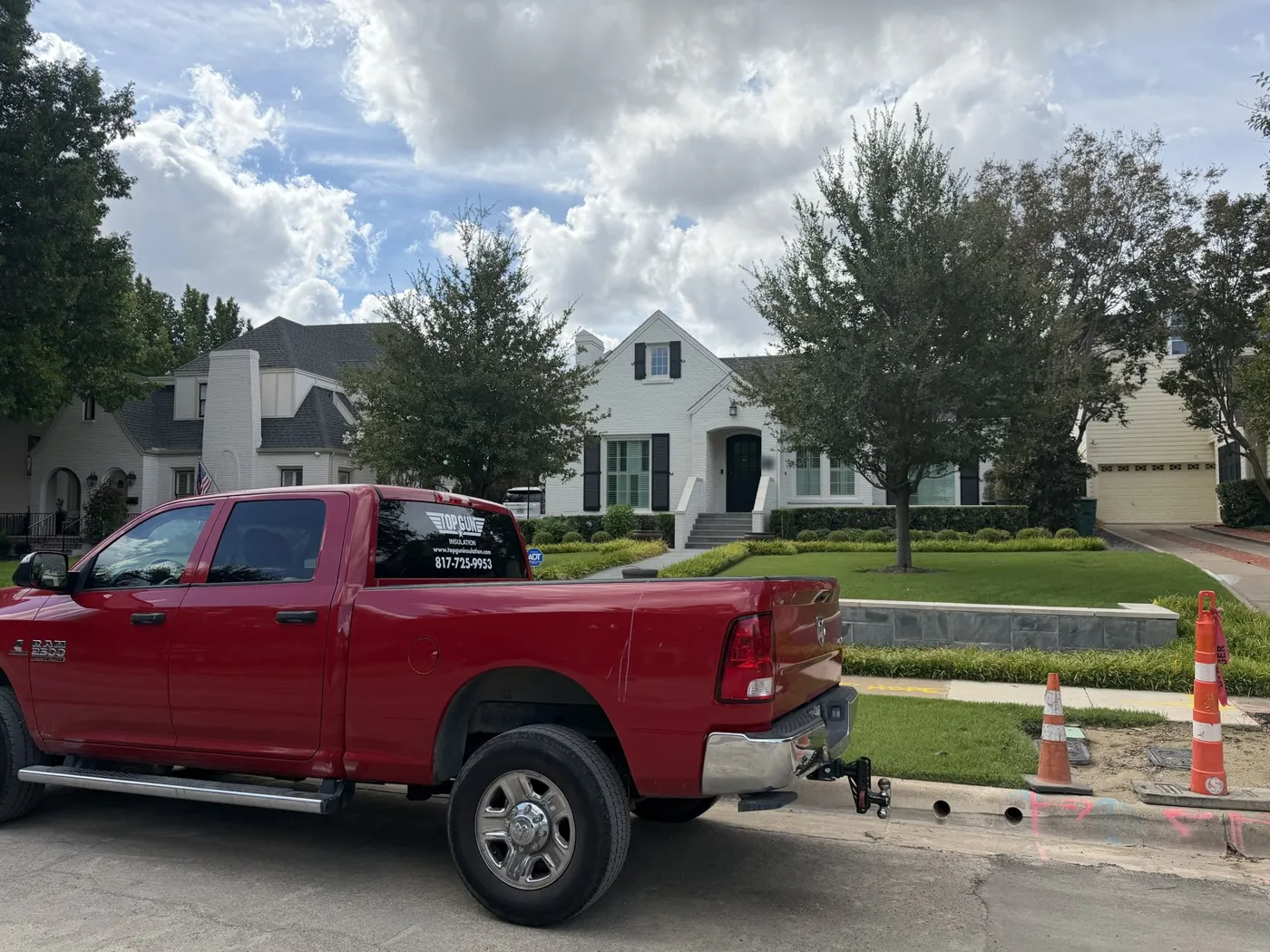
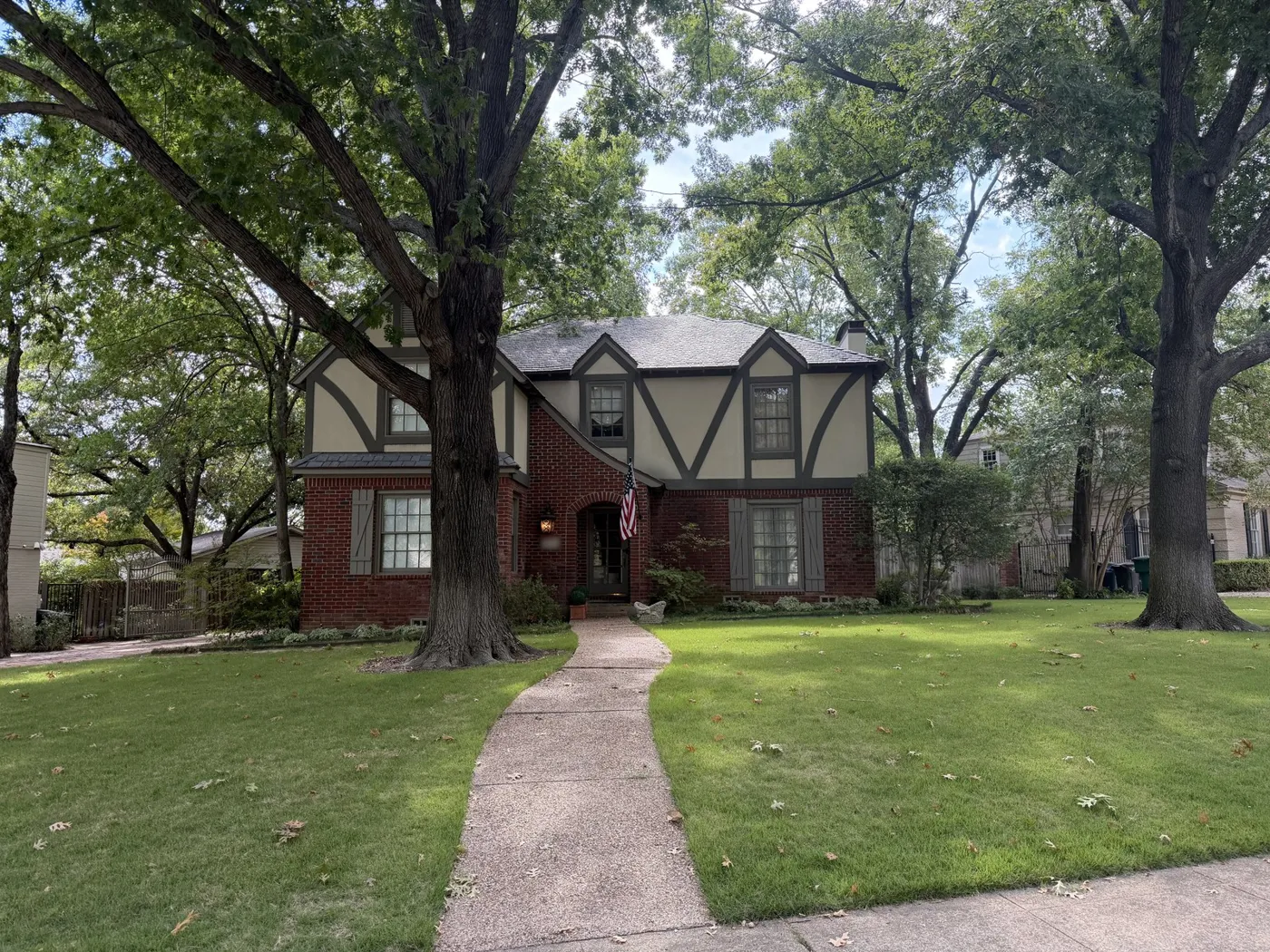
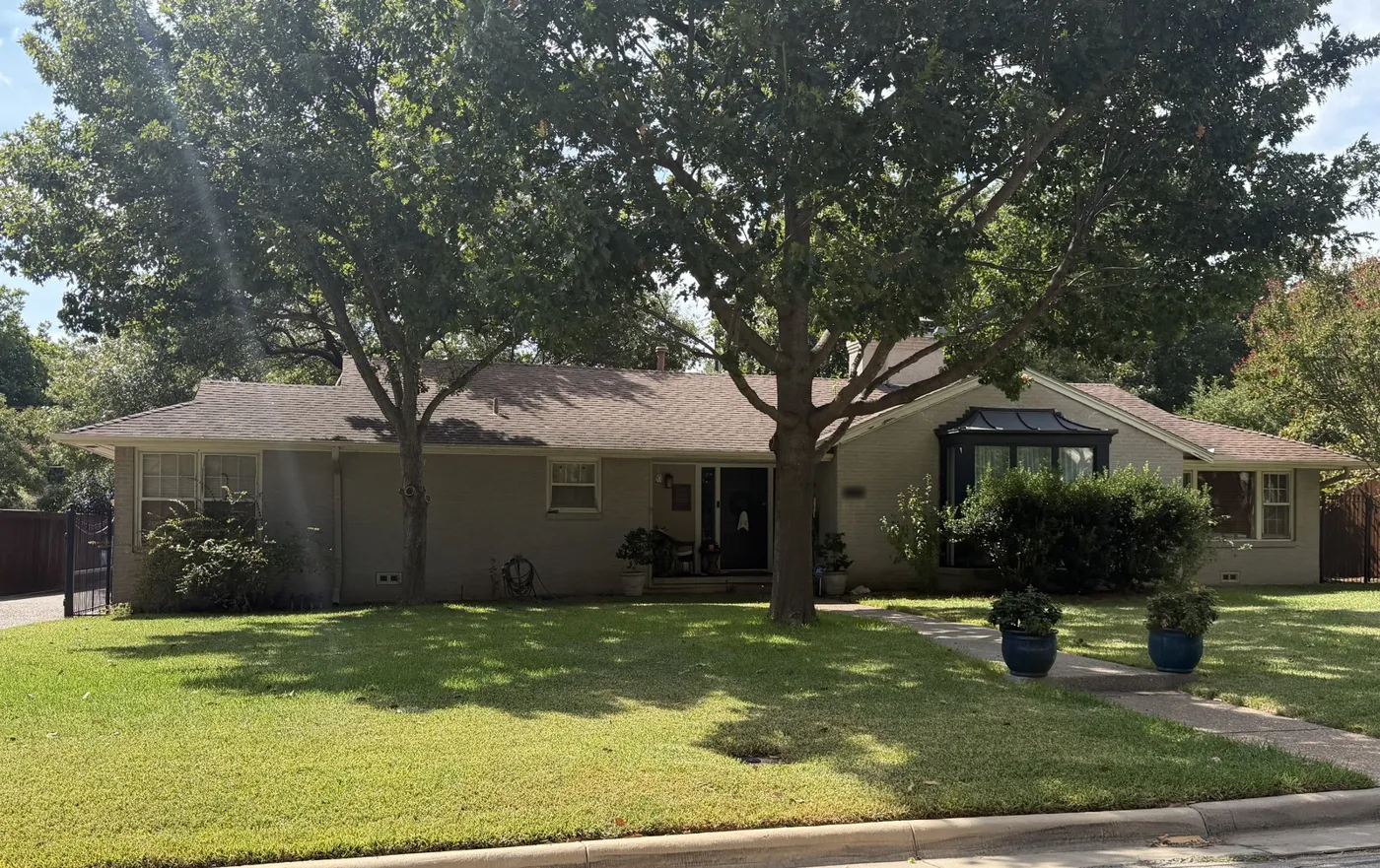
Attic insulation retrofits for older Monticello homes
Many Monticello houses were built long before today's insulation standards. Their attics often hold a thin, uneven layer of old material that has settled for decades, been pushed aside for wiring and ductwork, and never been topped off. In two-story homes the problem shows up upstairs first: bedrooms under the roof that run hot all summer and cold on winter mornings, no matter where the thermostat is set.
A retrofit brings that existing attic up to where it should be. We start by getting into the attic and looking: how much insulation is there, how evenly it covers the ceiling, where air is leaking through, how the attic is vented, and whether anything has to come out first. Then we lay out the options in plain language before any work is scheduled.
Knee walls and finished attic rooms
Tudor and cottage designs often tuck living space under the roof. That means sloped ceilings, short knee walls, and small attic pockets behind them that are easy to miss. These areas are a common reason an upstairs room never feels comfortable: the knee wall may have little or no insulation, and the open space behind it lets attic heat sit right against the room.
Spray foam insulation is often the right tool for these spaces because it fills irregular cavities and seals air leaks in one step, including along the roofline where blown material cannot stay in place. Closed cell and open cell foam each have a place, and we will explain which one fits your rooms and why.
Blown-in insulation over older ceilings
Where there is an open attic floor, blown-in insulation is usually the most direct way to add depth. Loose fill reaches around joists, old wiring and the odd framing you find in older houses, and it can be brought to an even level across the whole ceiling. On a single-story Monticello home, a well-done blown-in retrofit is often the biggest single comfort improvement available.
Taking out old insulation first
Older attics sometimes hold insulation that should not stay: material that is matted from old roof leaks, disturbed by animals, or mixed with decades of dust and debris. Covering it up hides the problem. Insulation removal clears the attic floor so gaps around top plates, plumbing and light fixtures can be sealed before the new insulation goes in. If yours does not need it, we will tell you.
Air sealing around chimneys, fixtures and attic access
Houses of this age tend to leak air in predictable places: around chimney chases, through gaps where old walls meet the ceiling, at recessed or ceiling-mounted fixtures, and at attic hatches and pull-down stairs that were never weatherstripped. Sealing those paths is part of a good retrofit, because once new insulation covers the attic floor they are hard to get back to.
Radiant barrier for rooms under the roof
In a North Texas summer the roof deck gets far hotter than the air outside, and rooms directly beneath it feel that heat first. A radiant barrier reflects much of that heat before it reaches the attic space. Combined with the right insulation, it can help upstairs rooms and attic ductwork stay closer to the temperature you set. Whether it is worth it depends on your house, and we will give you a straight answer.
What we check on a Monticello attic visit
- Insulation depth and coverage across the whole ceiling, not just near the hatch.
- Knee walls, sloped ceilings and the pockets behind finished attic rooms.
- Air leaks at chimneys, top plates, fixtures and the attic access.
- Roof and soffit ventilation, and any sign of past roof leaks.
- Ductwork running through the attic, and whether the plan needs to work around it.
Your local insulation contractor from Fort Worth
Top Gun Insulation is a Fort Worth company, based at 1943 Golden Heights Rd #300, serving homeowners and businesses across North Texas. When you call, you talk to the people who do the work, and every job starts the same way: we look first, explain what we found, and recommend only what your attic needs. The U.S. Department of Energy publishes recommended insulation levels by climate region; we measure what you have and tell you what it takes to get there.
Common questions from Monticello homeowners
Can you insulate an older two-story house without opening the walls? In most cases the attic, knee walls and roofline can be reached from inside the attic spaces. We will tell you what is reachable once we have looked.
My upstairs is always hotter than downstairs. Is that the insulation? Often it is a combination of thin attic insulation, air leaks and roof heat. An inspection shows which one matters most in your house.
Do you work in the neighborhoods around Monticello? Yes, throughout Fort Worth and the DFW area. See all of our service areas.
Talk to Top Gun about your Monticello attic
Call (817) 725-9953 or request an estimate. We will look first and tell you straight what your attic needs.
Top Gun Insulation · 1943 Golden Heights Rd #300, Fort Worth, TX 76177 · Find us on Google ↗