
Attic Insulation in Crestwood, Fort Worth
Top Gun Insulation has completed attic insulation retrofits for homeowners in Crestwood, the established Fort Worth neighborhood west of downtown that backs up to the Trinity River. Crestwood is a mix: older brick houses, mid-century ranch homes under big oaks, and newer builds along the same curving streets. The photos below show Crestwood homes where our crew did the work.
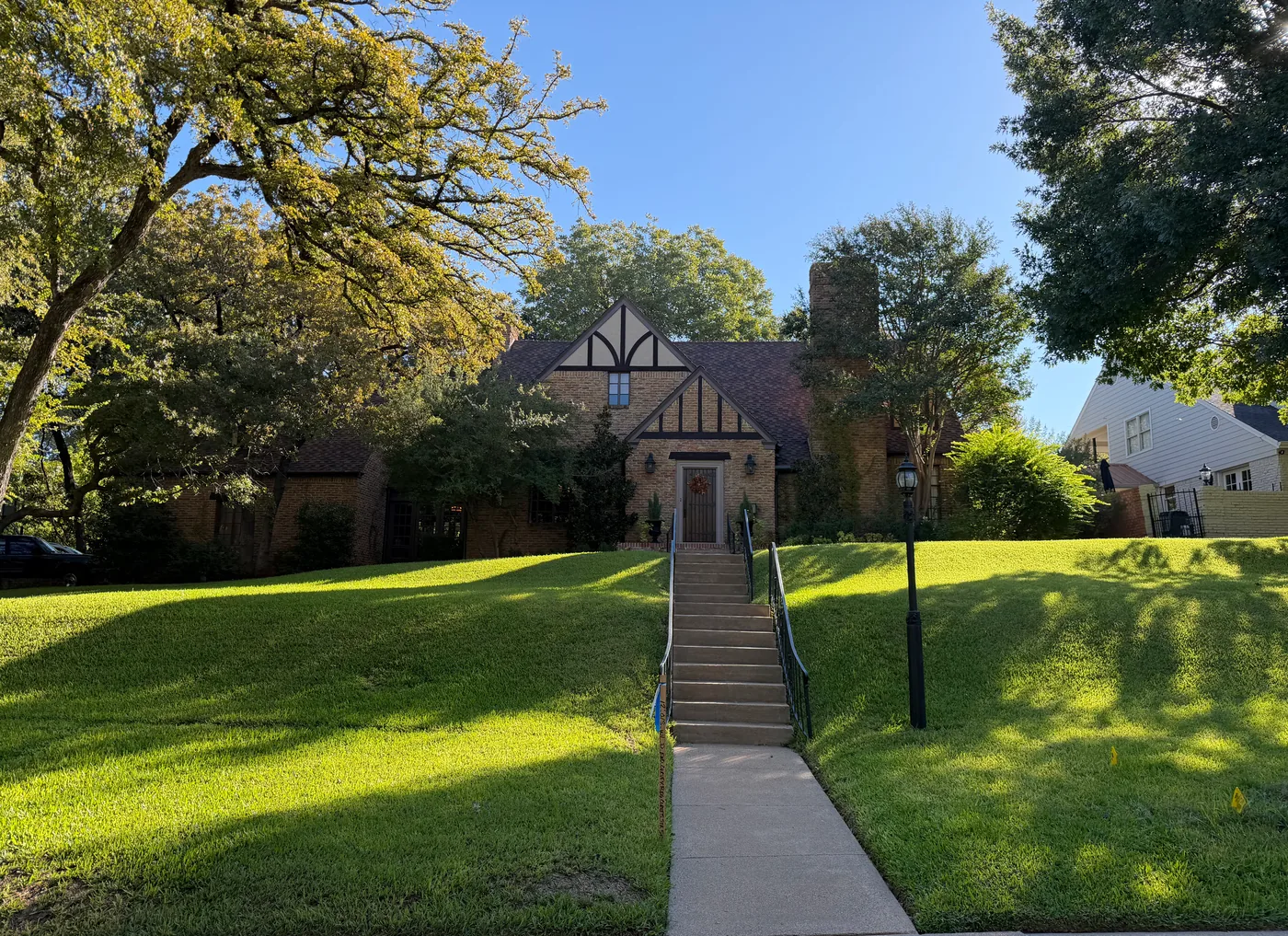
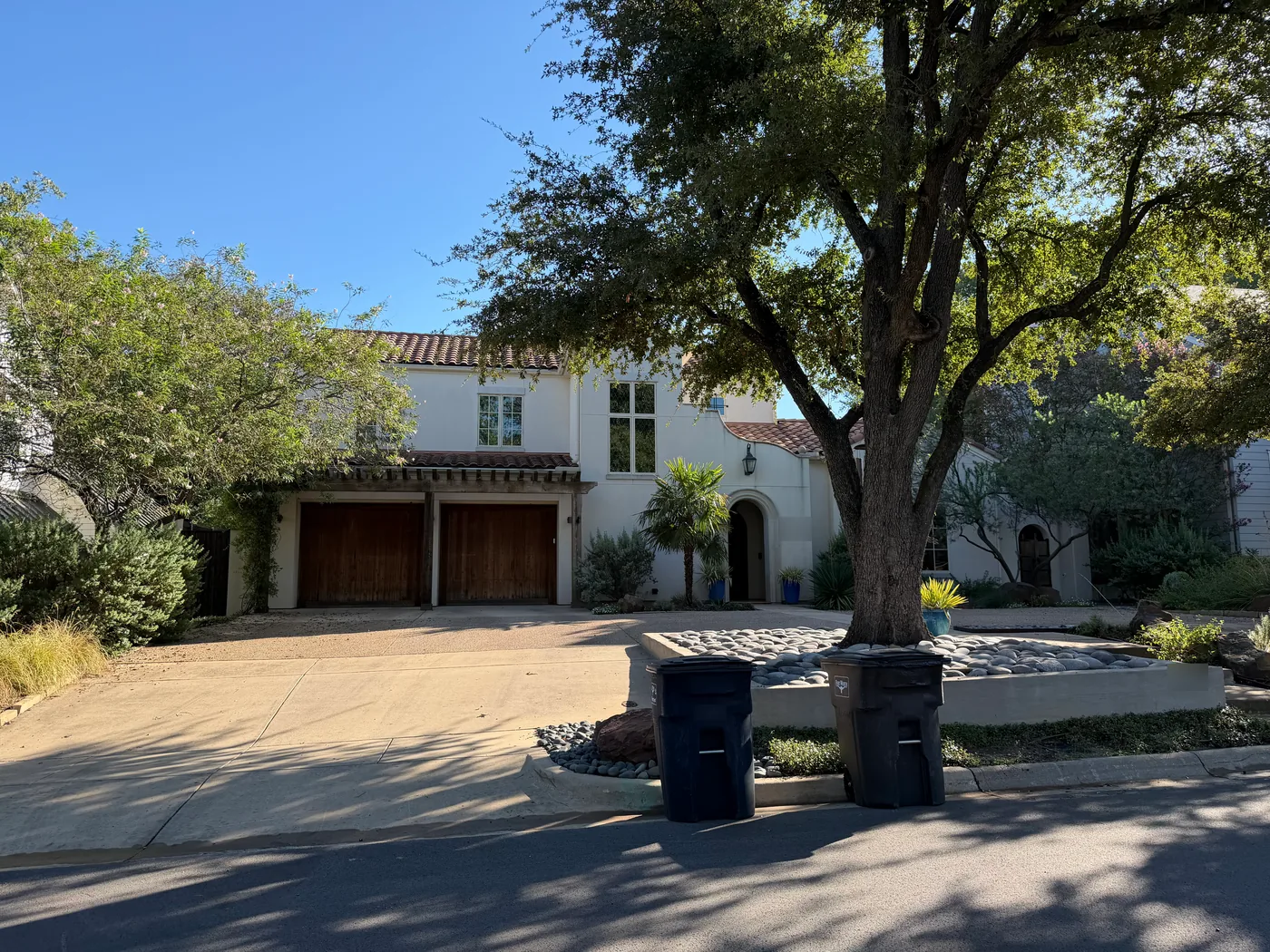
Attic insulation for established Crestwood homes
Houses built a couple of generations ago were insulated to the standards of their day, which meant a thin layer in the attic. Time has not been kind to it. Loose material sinks. Batts get flattened under stored boxes and plywood walkways. Every trade that has crossed the attic since, for a new light, a cable run or a duct, pushed some aside and rarely put it back.
What remains is an attic floor with bare patches where the ceiling drywall shows through, usually right above the rooms that are hardest to keep comfortable. Adding attic insulation to a house like this is a retrofit: we work with the structure that is there and fix what is not doing its job.
Blown-in insulation for shallow Crestwood attics
Plenty of mid-century roofs were framed low. A low-slope roof looks right on a ranch house, but it leaves very little headroom inside, and at the eaves the roof deck drops to within a hand's width of the ceiling. That outer edge is where insulation is most often missing, because nobody could crawl out far enough to place it.
Blown-in insulation suits these attics because the hose goes where a person cannot. Loose fill can be directed out toward the eaves, around framing and over uneven surfaces, then built up to a consistent depth across the ceiling. Before we blow anything, we check the soffit vents. Insulation packed tight against the roof at the eave chokes off the air an attic needs, so we keep that path open with baffles wherever the framing allows.
Insulation removal before new material goes in
Not every old attic has to be emptied. Clean, dry insulation that has only settled can often stay and be topped up. Insulation removal is the better call when the existing layer is damp from a past roof leak, soiled by rodents, or mixed with construction debris.
In an older house there is a second reason: with the attic floor exposed, we can see the wiring. Aging cable, open splices and older wiring types should be checked by an electrician before they are buried, and recessed can lights need either the right clearance or a rated cover. We point out what we find and plan the job around it.
Spray foam insulation for additions and awkward spaces
Houses of this age have often grown over time. A den added at the back, a garage turned into living space, a second story over part of the original footprint. Each addition was insulated by whoever built it, to whatever was normal then, so one house can hold three attics with three levels of protection. Where old framing meets new, there is often an open gap that lets attic air straight into a wall.
Spray foam insulation earns its place in these spots. Foam bonds to the surface it is sprayed on, so it can insulate a sloped ceiling, a short wall between attic and room, or a roofline with no space for loose fill, and it closes air leaks as it goes. Where an open, reachable attic floor only needs more depth, blown material is usually the simpler job.
Radiant barrier under a sun-baked roof
Shade from mature trees helps, but most roofs still take hours of direct sun through a long Texas summer. In a shallow attic the hot roof deck sits close to the ceiling and to any ductwork running through the space. A radiant barrier is a reflective layer installed at the roofline that turns back much of that radiant heat before it builds up in the attic. It works alongside insulation, not in place of it. Whether it makes sense depends on roof pitch, access and what is already up there.
An insulation contractor based in Fort Worth
Top Gun Insulation is a Fort Worth company serving homeowners across North Texas. Federal energy guidance sets recommended attic insulation levels for our climate zone, and we measure what you have against it. Here is how a Crestwood visit goes:
- Access first. In an older home the way in may be a small ceiling hatch in a hallway or closet, not a pull-down stair. We protect the floor below and check whether the hatch itself is insulated and sealed.
- A full look. We go past the easy area by the hatch: out to the eaves, over each addition, and around wiring, lights, ducts and vents.
- Plain options. You hear what we would do and why, including the parts we would leave alone.
- Tidy finish. The crew covers its path through the house, does the work, cleans up and shows you the result.
Common questions from Crestwood homeowners
My attic is too low to stand in. Can it still be insulated? Usually, yes. Blown material reaches most of a low attic floor from a few positions. If a section cannot be reached, you will hear it from us before the job starts.
Is it safe to cover old wiring and can lights? It depends on the fixture and the wiring. Some are rated for contact with insulation and some are not, so we check before covering anything.
Do you work outside Crestwood? Yes, across Fort Worth and the surrounding cities. Here is the full list of our service areas.
Talk to Top Gun about your Crestwood attic
Call (817) 725-9953 or request an estimate. We will get into the attic, show you what is there and give you a plain answer about what it needs.
Top Gun Insulation · 1943 Golden Heights Rd #300, Fort Worth, TX 76177 · Find us on Google ↗